Introduction
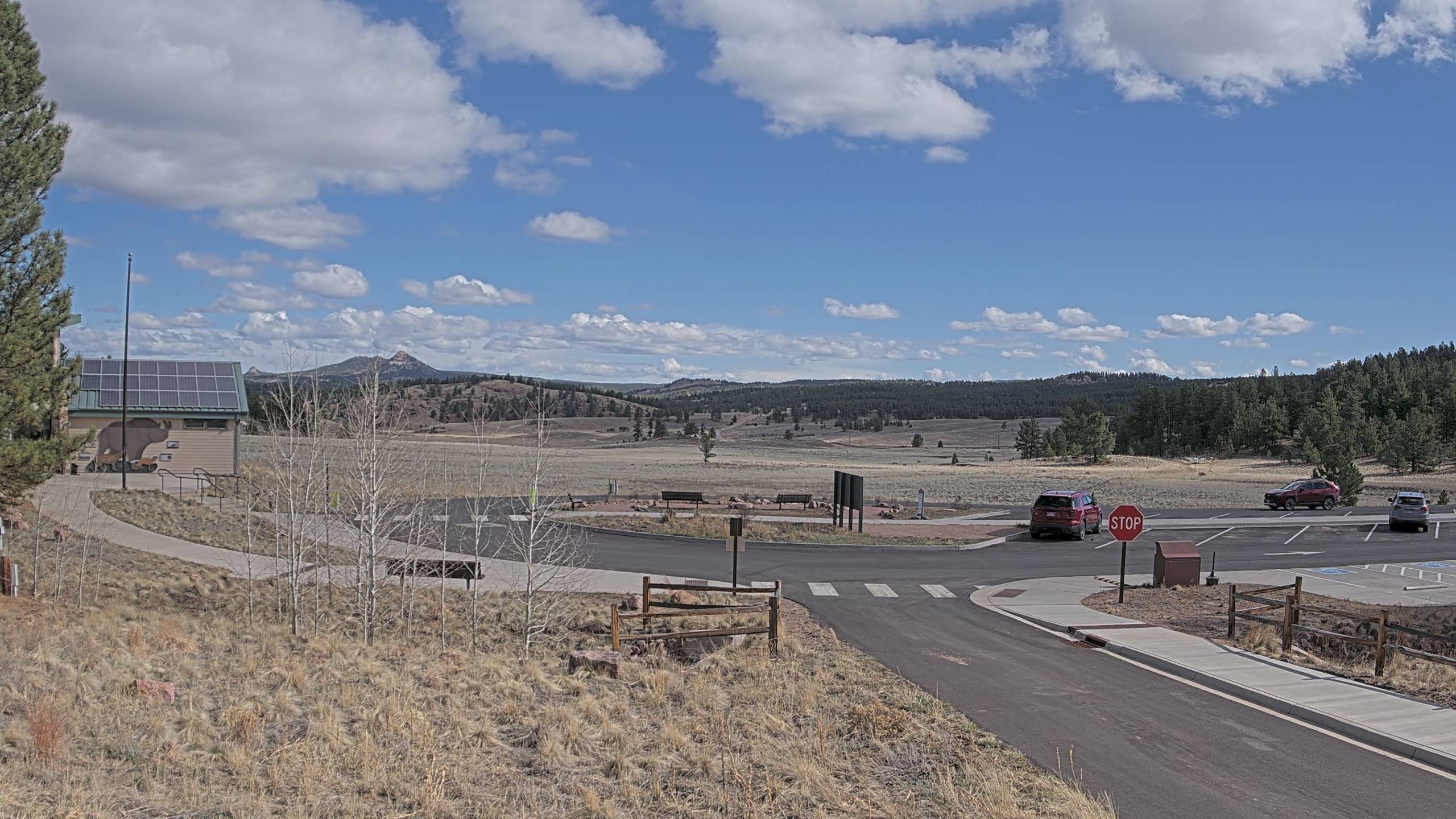
Florissant Fossil Beds National Monument protects one of the richest fossil deposits in the world, tucked into a mountain valley west of Colorado Springs. The monument is best known for giant petrified redwood stumps and exceptionally detailed fossils of insects, leaves, flowers, seeds, and other traces of life from ancient Lake Florissant.
The fossils preserve a very different Colorado. About 34 million years ago, volcanic activity and lake sediments helped capture delicate plants and animals in fine layers of shale. Today, visitors can see petrified stumps outside, fossil exhibits inside the visitor center, and open views across the same valley where scientists continue to study the Florissant Formation.
Visitor Center and Fossils
The visitor center is the best first stop for exhibits, orientation, the park film, and examples of the monument's delicate fossil plants and insects. Behind the visitor center, the outdoor exhibit area and Petrified Forest Loop lead visitors past some of the monument's famous fossilized redwood stumps, including the Big Stump.
Hiking
Florissant Fossil Beds has more than 14 miles of hiking trails through meadows, ponderosa pine, aspen, Douglas fir, and fossil-rich terrain. The Petrified Forest Loop is the classic short walk for seeing petrified stumps and learning about ancient Lake Florissant. The Geologic Trail adds a compact look at the valley's deep geologic story, while the Ponderosa Loop is a short accessible trail through modern forest.
Longer routes include the Hornbek Trail, Sawmill Trail, Boulder Creek Trail, Shootin' Star Trail, and other connecting routes. These trails show more of the monument's quiet montane landscape, with open meadows, wildlife habitat, stream corridors, rock formations, and views toward Pikes Peak. Some trails or outdoor exhibit areas may close outside visitor hours, so checking current NPS information before arriving is a good idea.
Twin Rock Trail
Twin Rock Trail is our favorite hike at Florissant Fossil Beds because it feels quieter and more varied than the shorter walks near the visitor center. The route moves through open meadows, aspen groves, stream habitat, willows, pond life, and views of the trail's namesake rock formations. Signs of wildlife are common, and the trail gives visitors a good feel for the monument's modern montane ecosystem beyond the fossil exhibits.
The NPS hiking map lists Twin Rock Trail as a moderate route that intersects both the Hornbek and Shootin' Star trails. From the Hornbek Parking Lot trailhead, the trail is 3.3 miles one way with about 420 feet of elevation change. From the Barksdale trailhead, it is 3.5 miles one way with about 280 feet of elevation change. Because the listed mileages are one-way, visitors should plan their return route, shuttle, or turnaround point before starting.
Hornbek Homestead
The Hornbek Homestead preserves an 1878 homestead built by Adeline Hornbek, one of the area's early settlers. The site adds human history to the fossil story, showing how people lived in the Florissant Valley long after the ancient lake and redwood forest disappeared.
Planning a Visit
Florissant Fossil Beds is a strong half-day stop and pairs well with other Pikes Peak region destinations. Recreation.gov provides a planning gateway for Florissant Fossil Beds National Monument, including federal pass and recreation information. Pets are restricted at the monument, and fossil collecting is not allowed, so visitors should review current rules before heading out.
Weather
The monument sits at high elevation in central Colorado, so temperatures can be cooler than nearby lower-elevation towns. Summer afternoons can bring thunderstorms, while winter and spring may bring snow, ice, mud, and changing trail conditions. Layers, water, sun protection, and footwear that can handle gravel, snow, or mud are useful most of the year.