

Introduction
Banff National Park is Canada's first national park and one of the best-known mountain parks in the world. Parks Canada describes Banff as a place where Rocky Mountain peaks, glacial lakes, and outdoor adventure come together. The park is part of the Canadian Rocky Mountain Parks UNESCO World Heritage Site.
For a broader overview of the park's history and geography, see the Banff National Park Wikipedia page.
The park includes the town of Banff, the community of Lake Louise, the Bow Valley Parkway, Lake Minnewanka, Moraine Lake, and access to the Icefields Parkway. Banff is busy in every season, so visitors should check Parks Canada alerts, trail conditions, transit information, camping reservations, and lake access rules before traveling.
Top Hikes
These three hikes are good starting points for planning, with at least one more difficult option. Distances and elevation gain are rounded; check the official park trail page for current closures, permits, weather, and trail conditions.
Plain of Six Glaciers (moderate) - 9.1 miles (14.6 km); elevation gain 1,929 feet (588 m). A Lake Louise classic with glacier views and a long alpine-valley finish.
Johnston Canyon to Ink Pots (moderate) - 7.3 miles (11.7 km); elevation gain 1,083 feet (330 m). A very popular canyon walk that continues beyond the waterfalls to mineral springs.
Cory Pass Loop (difficult) - 8.1 miles (13.0 km); elevation gain 3,000 feet (915 m). A steep, exposed mountain loop for experienced hikers near the Banff townsite.
Lake Louise and Moraine Lake
Lake Louise and Moraine Lake are two of Banff's most popular destinations. Parks Canada recommends transit as the easiest and most reliable way to visit both lakes, and reservations are required for Parks Canada shuttles during the busy season.
Camping
Banff has a large campground system spread across the town of Banff area, Lake Louise, the Bow Valley Parkway, and the Icefields Parkway. The Parks Canada camping page includes operating dates, services, reservation status, directions, and rules for hard-sided and soft-sided camping in bear country.
Common campground areas include Tunnel Mountain, Two Jack, Johnston Canyon, Castle Mountain, Protection Mountain, Lake Louise, Mosquito Creek, Rampart Creek, Silverhorn Creek, Waterfowl Lakes, and backcountry campgrounds. Parks Canada also lists campgrounds in the Banff area, backcountry camping, and equipped campsites for visitors who need more specific camping options.
Biking
Banff has road riding, paved paths, and mountain biking routes. Parks Canada notes that Banff has more than 190 kilometres of mountain bike trails plus numerous road riding options. Riders should check seasonal restrictions, trail conditions, wildlife notices, and e-bike rules before heading out.
Fishing
Fishing in Banff National Park is managed by Parks Canada regulations. Anglers should check the official fishing page for open seasons, closures, permitted gear, possession limits, and licensing requirements before fishing lakes, rivers, or streams in the park.
Webcam Notes
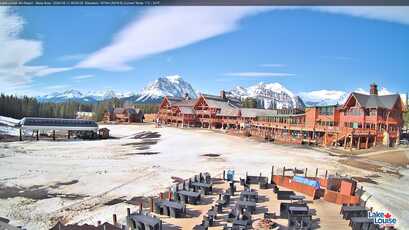
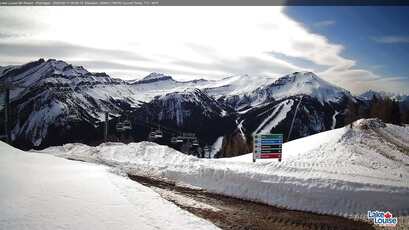
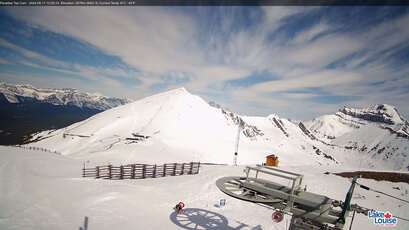
Feed credit: SkiBig3, Fairmont Chateau Lake Louise, and Mt. Norquay.