Introduction
Olympic National Park, located in the State of Washington on the Olympic Peninsula, is a treasure trove of natural beauty and historical significance. The park boasts four distinct regions: the Pacific coastline, alpine areas, the west-side temperate rainforest, and the forests of the drier east side. It's home to three distinct ecosystems, including subalpine forest and wildflower meadow, temperate forest, and the rugged Pacific coast. The park is an impressive 922,650 acres (3,733 square km).
The park's lands have been inhabited by eight contemporary tribes of the Olympic Peninsula, the Makah, Quileute, Hoh, Quinault, Skokomish, Port Gamble S'Klallam, Jamestown S'Klallam, and Lower Elwha Klallam. Since the 1880s, the Olympic Peninsula's unique environment has attracted visitors and naturalists. Prominent figures like John Muir and Lieutenant Joseph O'Neil were among the first to propose the creation of a national park in the area.
In 1897, the area was designated as Olympic Forest Reserve by President Grover Cleveland. Later, in 1909, President Teddy Roosevelt established Mount Olympus National Monument to protect the Roosevelt Elk. After President Franklin Roosevelt's visit in 1937, Olympic National Park was officially established the following year, in 1938.
The park was designated an International Biosphere Reserve in 1976 and a World Heritage Site in 1981, recognizing its global ecological significance.
For more on the park, visit the Wikipedia website.
Top Hikes
These three hikes are good starting points for planning, with at least one more difficult option. Distances and elevation gain are rounded; check the official park trail page for current closures, permits, weather, and trail conditions.
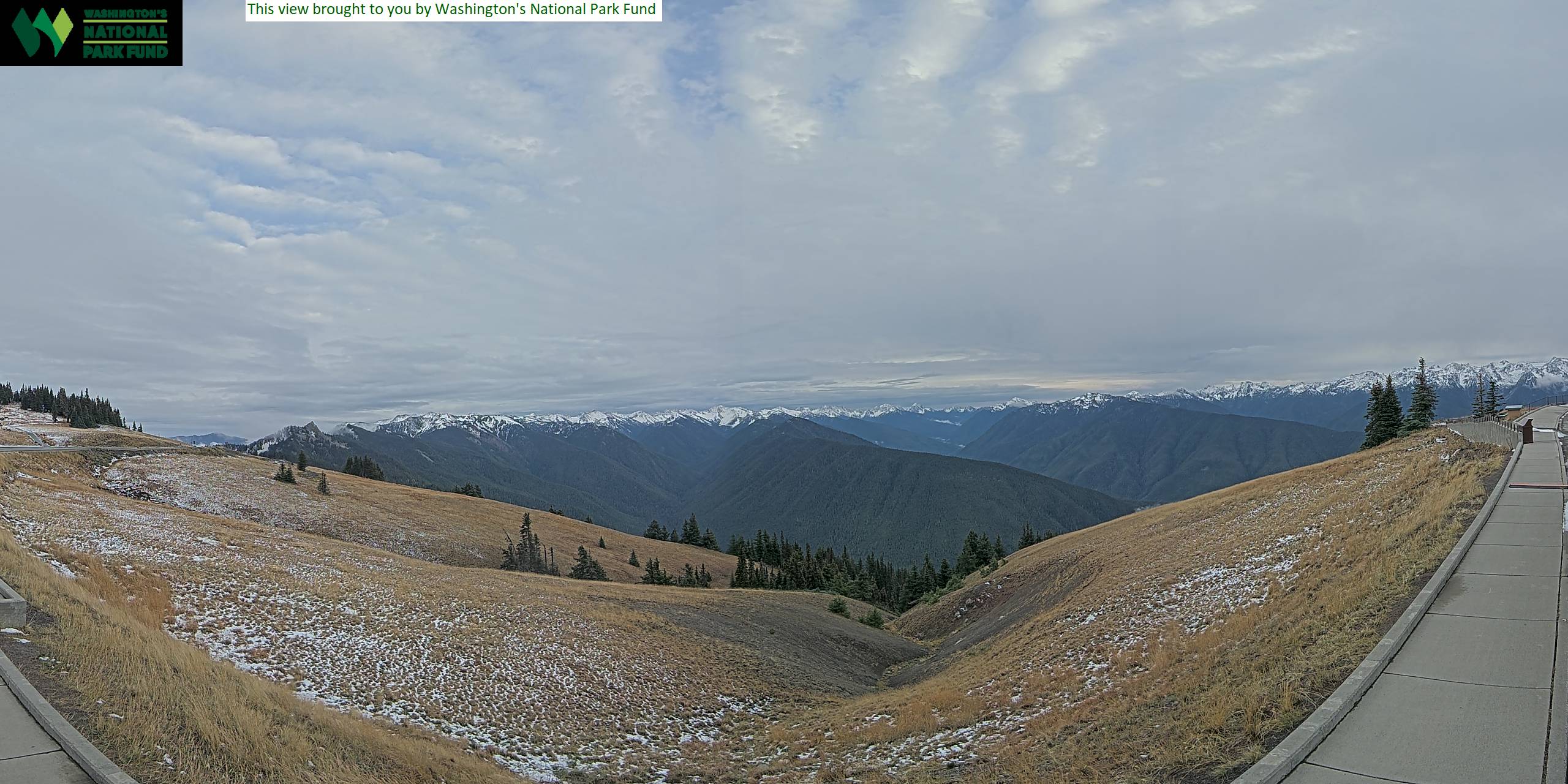
Hurricane Hill Trail (moderate) - 3.2 miles (5.1 km); elevation gain 650 feet (198 m). A Hurricane Ridge hike with open views of mountains and water.
Hoh River Trail to Five Mile Island (moderate) - 10.6 miles (17.1 km); elevation gain 300 feet (91 m). A long but gentle rainforest hike along the Hoh River.
Mount Storm King Trail (difficult) - 4.7 miles (7.6 km); elevation gain 2,065 feet (629 m). A steep Lake Crescent climb with exposed upper sections.
Backpacking
Here are our top three backpacking trips in the park. You will need overnight permits through Recreation.gov and, where required, camping reservations. Remember to store all food, garbage, and scented items in park-approved bear canisters.
The Hoh River Trail to Blue Glacier is a challenging hike that takes you through lush rainforests, past old-growth trees dripping with moss, and ends with a stunning view of the Blue Glacier and Mount Olympus. The round-trip length of the trail is 37 miles (59.5 km). The trail gains around 3,700 feet (1,128 m) in elevation. The highest point on the trail is at 4,300 feet (1,310 m).
The High Divide / Sol Duc Loop trail offers a mix of old-growth forest, subalpine meadow, and montane forest environments. It's a moderate to steep trek that provides opportunities to see Mount Olympus, various lakes, and wildlife such as elk and bears. The loop is approximately 18.2 miles (29.3 km), with an elevation gain of around 3,050 feet (930 m).
Enchanted Valley / Anderson Pass / O’Neill Pass Loop trail is not for the faint hearted. The trail is 49 miles long (79 km), with a total elevation gain of 10,124 feet (3,086 m). The trail offers spectacular views of the park.
Camping
There are seven reservable campgrounds and seven first-come, first-served campgrounds within the park. RV information and reservations are available at recreation.gov. Also visit the NPS website for more camping information. Due to snow, campgrounds can be closed, so please check the status of the campground beforehand.
The campsites below can be reserved during the peak season, which is May through September. Otherwise, the campsites are first-come, first-served.
Fairholme Campground is located on the north side of the Olympic Peninsula next to Lake Crescent. The campground offers a mix of walk-in lakefront sites and drive-in sites with views of Lake Crescent. Each site includes a table, fire ring, and grate. Reservations can be made at recreation.gov.
Hoh Rain Forest Campground is situated in the Hoh Rain Forest area. It earns its name from the ever-flowing Hoh River, which carves its way from Mount Olympus toward the Pacific Coast. The exact origin of the name "Hoh" remains a mystery, with various theories suggesting it could mean "fast-moving water," "snow water," or even "man with quarreling wives." The campground offers 88 sites located in the old-growth forest along the Hoh River. These sites accommodate both tents and RVs up to 21 feet (6.5 m). Some riverside campsites provide scenic views along the Hoh River. The Hoh River Trail is close by. Reservations can be made at recreation.gov.
Kalaloch Campground is our favorite campground along the coast. There are pit toilets, limited parking, and no direct beach access. There are 170 campsites with incredible ocean views. Most sites can accommodate RVs to 21 feet (6.5 m) and a few up to 35 feet (10.5 m). This campground is close to Ruby Beach. Reservations can be made at recreation.gov.
Mora Campground is located in old-growth forest along the Quillayute River, close to Rialto Beach. The campground has 94 sites and can accommodate RVs to 21 feet (6.5 m) and a few up to 35 feet (10.5 m). Pit toilets, an RV dump, flush toilets, and drinking water are available. Rialto Beach and Second Beach are close by. In addition, the Hole in the Wall is close by. Reservations can be made at recreation.gov.
Sol Duc Campground is located in old-growth forest along the Sol Duc River. There are 82 campsites, and the campground can accommodate RVs to 21 feet (6.5 m) and a few up to 35 feet (10.5 m). The campground is close to Sol Duc Hot Springs. More information on the hot springs is available at the NPS site. Reservations can be made at recreation.gov.
Staircase Campground is in the southeastern corner of the park. The campground has 49 sites along the North Fork of the Skokomish River. The access road is unpaved. Pit Toilets are available. Reservations can be made at recreation.gov.
Log Cabin Resort RV & Campground is the only full-service campground in the park. It has 5 tent sites and 32 RV campsites with electricity and water. The campground is located on Lake Crescent. Reservations can be made by calling 888-896-3818.
First-Come, First-Served Campsites
Deer Park Campground is 5,400 feet (1,645 m) above sea level and has 14 campsites. The last 9 miles (14.5 km) are unpaved, narrow, and steep. It is not recommended for RVs or trailers. The mountain views from the campground are incredible. Fire pits and picnic tables are available.
Graves Creek Campground is located at the south end of the park. There are 30 sites at the campground. This is a tent-only campground. The campground is along the shore of the Quinault River and has abundant wildlife.
Heart O'the Hills Campground is 15 minutes from Port Angeles on the northern part of the park on the road to Hurricane Ridge Road South. There are 105 campsites that can accommodate RVs up to 35 feet (10.5 m). Fire pits, picnic tables and pit toilets are available.
North Fork Quinault Campground is the smallest campground in the park. May not be suitable for RVs or trailers due to the gravel road. The campground is located on the banks of the Quinault River.
Ozette Campground is next to Lake Ozette and just three miles from the Pacific Ocean. There are 15 sites in the campground. Some sites can accommodate RVs up to 21 feet (6.5 m).
Queets Campground has 20 campsites and is not suitable for RVs. The campground is very secluded and sits between the Queets and Sam’s Rivers.
South Beach Campground is located in the Kalaloch Area of the park. It has 55 sites and can accommodate RVs to 35 feet (10.5 m). There are beautiful views of the Pacific Ocean and pristine beaches.
Fishing and Boating
Fishing in Olympic National Park includes Pacific coast, lake, and river opportunities, but seasons, catch limits, closures, and gear rules vary by location and species. Check the NPS fishing page and current fishing regulations before you go, and make sure you have the proper Washington state license when required.
Boating is popular on park waters such as Lake Crescent, Lake Ozette, and coastal areas, but conditions can change quickly and some waters have motor, launch, or invasive-species restrictions. Check the NPS boating page for current rules, safety guidance, and area-specific information before launching.
Lodges
Olympic National Park offers a variety of lodges and accommodations for visitors to enjoy the stunning natural beauty of the area. Each has their own charm and are spread out over the park.
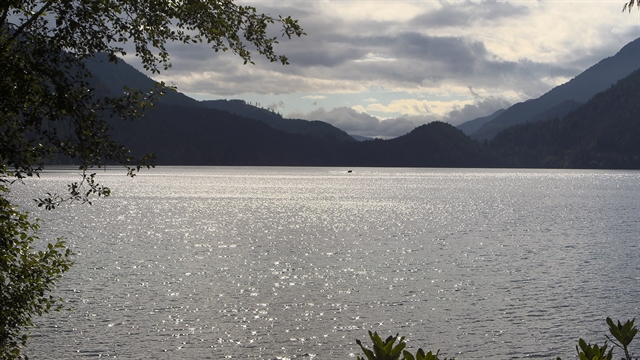
Lake Crescent Lodge, originally known as Singer's Lake Crescent Tavern, is a historic resort nestled on the shores of Lake Crescent in Olympic National Park, just west of Port Angeles, Washington. In 1914, Avery and Julia Singer constructed a small hotel and cottages at Barnes Point along the Lake Crescent shoreline. The establishment, known as Singer's Tavern, opened its doors in 1915. The original Tavern featured seven lodge rooms, five of which are still in use today, along with a series of charming cottages. The Singers invested nearly $50,000 in constructing and furnishing the hotel. The main living room boasted a large stone fireplace and opened onto a porch overlooking the serene lake. In 1927, the Singers sold the property to the Seattle Trust Company, which subsequently transferred ownership to Walter and Bessie Bovee.
The lodge, now owned by the National Park Service and operated by Aramark, continues to enchant visitors. It opens seasonally from early May until the end of January, with select cabins available during winter months. Notable hiking trails include Marymere Falls, Spruce Railroad, and Barnes Creek Trails.
Kalaloch Lodge is situated on the pristine Pacific coast within Olympic National Park, offers a captivating blend of natural beauty and history. In the 1920s, Charles W. Becker Sr. purchased 40 acres of land where Kalaloch Lodge now stands. Becker constructed his retreat using driftwood collected from the beach, which he milled into lumber. The original lodge and cabins emerged from these weathered pieces of driftwood. The highway connecting to Kalaloch wasn't completed until 1931, making the journey to this remote corner of the world quite challenging for early guests.
In 1953, the Main Lodge was built, adding to the lodge's charm and in 1978, the entire property was sold to the National Park Service. Today, Kalaloch Lodge is run by Delaware North Companies.
The lodge offers charming rooms in the Main Lodge, cozy cabins, and hotel-style rooms in nearby Seacrest House. The lodge features an acclaimed restaurant and a standalone store for food, firewood, and other necessities.
Lake Quinault Lodge, a historic gem nestled on the southeast shore of Lake Quinault. Constructed in 1926, the lodge was envisioned by Seattle architect Robert Reamer. Reamer, known for his work at the Old Faithful Inn in Yellowstone National Park, designed Lake Quinault Lodge in a rustic style that harmonized with its woodland surroundings.
Prior to the current lodge, a two-story wood-frame structure occupied the same site. Built by Jack Ewell, it changed hands over the years, from the Higley family to the Olsons and eventually the Seaman family. Tragically, the original hotel succumbed to fire on August 24, 1924.
Lumberman Ralph Emerson of Hoquiam stepped in to fund the replacement lodge. The initial stage was a modest 1.5-story structure, which still stands today as the annex (restored in 2007). The lodge's popularity demanded expansion, leading to the creation of a new, more elaborate building. Work commenced on June 9, 1926, and remarkably, the lodge was complete just fifty-three days later on August 18, 1926. Reamer's expertise in designing hotels within natural settings ensured Lake Quinault Lodge's timeless appeal.
The lodge changed hands over time, with Emerson selling it in 1939. During World War II, the lodge closed temporarily. After the war, the Walker family operated it until 1988, when it was purchased by the Aramark corporation.
The roughly V-shaped main lodge centers around a lobby with a masonry fireplace, offering stunning views of the lake. Dormers and a cupola accentuate the steep roof, while cedar shingles clad the 2.5-story wood-frame structure. Expansive windows frame the lobby, inviting nature indoors.
Log Cabin Resort was established in 1895 at the same location where it stands today. The resort proudly embraces its family-oriented ethos, welcoming generations of visitors seeking relaxation and adventure. The rustic cabins are nestled amidst towering old-growth cedars and firs, evoking memories of summer camps and lakeside retreats.
Sol Duc Hot Springs Resort, nestled within the majestic Olympic National Park, has a rich history that intertwines with the natural wonders of the region. In the late 1800s, settlers discovered the hot springs in the area and named them "Sol Duc," a mispronunciation of the Quileute word for "sparkling waters." The first hotel at Sol Duc was built in 1912, but unfortunately, it burned down in 1916. Undeterred by the fire, the resort was rebuilt on a more modest scale in the 1920s. However, it wasn't until the 1980s that the resort underwent a complete transformation, resulting in the appearance we see today.