Introduction
Yellowstone National Park, nestled across the states of Wyoming, Montana, and Idaho, stands as a testament to the enduring relationship between humans and the land. Its rich history, diverse wildlife, and awe-inspiring attractions make it a must-visit destination for nature enthusiasts and curious travelers alike. Ninety-six percent of the park resides in the state of Wyoming. The other 4 percent are in Idaho and Montana. The Yellowstone Caldera is the second largest in the world, with a huge magma chamber underneath the park.
The human history of Yellowstone extends back more than 11,000 years. Archeological sites, trails, and oral traditions reveal evidence of early human presence. Tribes like the Tukudika (also known as Sheep Eaters) inhabited the region, leaving their mark on the landscape. European Americans began exploring the area in the early 1800s, with Osborne Russell recording visits in the 1830s. The first organized expedition to Yellowstone occurred in 1870.
In 1872, President Grant officially established Yellowstone National Park, becoming America's first national park. The arrival of the railroad in 1883 facilitated easier visitor access, allowing people to witness the park's wonders firsthand. The US Army managed the park from 1886 to 1918, and automobiles were permitted within its boundaries in 1915. The creation of the National Park Service in 1916 marked a pivotal moment in Yellowstone's management.
Yellowstone spans an impressive 2.2 million acres of pristine wilderness. The third largest national park after Wrangell-St. Elias and Death Valley National Parks. Within this vast expanse, visitors encounter a diverse landscape that includes geysers, hot springs, canyons, forests, and rivers. The park attracts a large number of visitors each year. NPS Stats 2025 recorded 4,762,988 recreation visits.
Wildlife is abundant within the park’s boundaries. There are almost 6,000 buffalo, which can almost always be seen in the Hayden Valley during the summer. Grizzly bears, black bears, elk, and iconic bald eagles can be found within the park. Wolves were reintroduced in 1995 and now play a vital role in the ecosystem. A recent census puts the wolf population at 124 wolves.
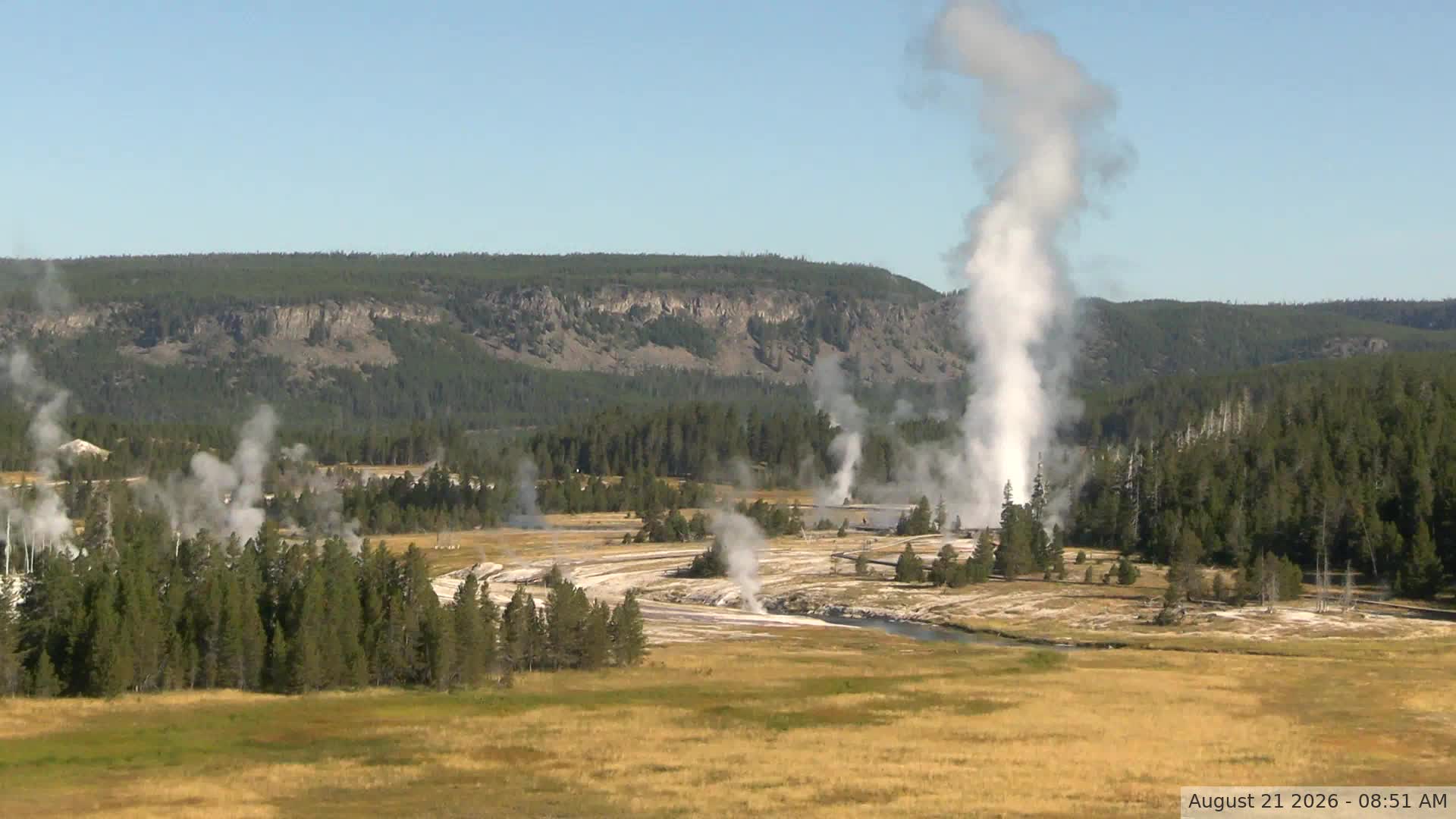
Yellowstone boasts approximately half the world's active geysers. Among them, Old Faithful steals the show, erupting with predictable regularity. The park's geothermal areas also feature bubbling mud pots, colorful hot springs, and steaming fumaroles. The geyser basin is a must see.
Carved over millennia, the Grand Canyon of the Yellowstone River is a breathtaking geologic wonder. Its vibrant hues and thundering waterfalls captivate visitors. The pristine Yellowstone Lake is surrounded by snow-capped peaks, offers tranquility and stunning vistas.
For more information, visit the park's Wikipedia page.
Top Hikes
These three hikes are good starting points for planning, with at least one more difficult option. Distances and elevation gain are rounded; check the official park trail page for current closures, permits, weather, and trail conditions.
Grand Prismatic Overlook and Fairy Falls (moderate) - 5.0 miles (8.0 km); elevation gain 200 feet (61 m). A popular geyser-basin area hike combining an overlook with a waterfall route.
Mount Washburn Trail (difficult) - 6.0 miles (9.7 km); elevation gain 1,400 feet (427 m). A classic summit hike with broad views and frequent wildlife sightings.
Avalanche Peak Trail (difficult) - 4.2 miles (6.8 km); elevation gain 2,100 feet (640 m). A steep high-elevation climb near Yellowstone Lake.
Backpacking
Backpacking in Yellowstone National Park is an adventure, to say the least. Most trails are not heavily used and wildlife seems to be everywhere. There are many bears in the park. Carry bear spray, know how to use it, and make noise so wildlife knows you are nearby. Permits are required for overnight backcountry stays, and reservation or lottery details can change by season, so check the official NPS backpacking page and Recreation.gov before planning a trip. Carry a bear-resistant food container and a water filter. These are not beginner trips. My two favorite backpacking trips are below.
Larmar Valley to Pelican Valley trail is around 34 miles (55 km) with an elevation gain of 1,400 feet (427 m). The Lamar Valley has incredible wildlife. The trail is only open from July to early November due to bear activity. Plan on three nights.
Black Canyon of the Yellowstone is between 22 to 26 miles (35 - 42 km) depending on the trail. It is not the easiest hike, with an elevation gain of 3,052 feet (930 m) but the views of the Yellowstone River and wildlife are worthwhile. There are four trailheads, we prefer The Tower Junction parking lot (less tourists). This is a point-to-point hike so you will need either a vehicle at the other end. Plan on two nights.
Fishing
Around 50,000 anglers fish the rivers, lakes, and streams of Yellowstone every year. Fishing season usually starts around Memorial Day and ends at the end of October. A Yellowstone fishing permit is required and can be purchased through the official park fishing permit system. All native fish, including cutthroat trout, mountain whitefish, and Arctic grayling, must be released. Non-native fish rules vary by species and drainage, so check current NPS fishing regulations before keeping or releasing fish. Use barbless hooks or pinch down the barb with pliers. No lead tackle is allowed.
You are in bear territory. Bring bear spray and know how to use bear spray. Make noise so they know you are around.
For a full list of restrictions, limits, boating, etc., please visit the NPS website.
Wildlife Viewing
Yellowstone is the top national park to view wildlife. Animals usually feed early in the morning or in the evening. The Hayden Valley is one of the top spots to see wildlife. Make sure you bring a pair of binoculars or a spotting scope. Also, most people with scopes are usually willing to point out wildlife to you. The NPS website has a section of where to go to see individual species.
Bison, bear jams happen often, especially in the Hayden Valley. Use the numerous pullouts to view the wildlife, never park your car on the road. Also, bison are huge and can be aggressive. Stay at least 25 yards (23 m) away from all wildlife. Bears and wolves are the exception, stay 100 yards (91 m) from them.
Bear attacks can be attributed to many factors. The first is taking them by surprise. Make noise as you hike. The second is getting between a mother bear and her cub. She will defend her baby.
Campgrounds
The NPS campground page lists 11 open or reservable campgrounds in Yellowstone National Park, with Pebble Creek closed until further notice for flood recovery work. Five campgrounds are reservable through Yellowstone National Park Lodges and the rest are reservable through recreation.gov. Fishing Bridge RV Park is the only campground with full RV hookups and is limited to hard-sided vehicles. Reservations fill early, so book as soon as your travel dates open.
Reservable through Yellowstone National Park Lodges
Bridge Bay Campground is one of the largest campgrounds in the park and sits near Yellowstone Lake. It works well for visitors who want lake access, the Bridge Bay Marina area, and a base for exploring the Lake and Fishing Bridge side of the park.
Canyon Campground sits in a lodgepole forest near Canyon Village. This is one of the most central campground locations in Yellowstone and is convenient for the Grand Canyon of the Yellowstone, Hayden Valley, and Mount Washburn area.
Fishing Bridge RV Park is for completely hard-sided RVs only, with no tents or tent campers allowed. It is near Yellowstone Lake and the Yellowstone River, and it is the only park campground with water, sewer, and electrical hookups.
Grant Village Campground is near the southwest shore of Yellowstone Lake. It is a good choice for visitors spending time around West Thumb, Grant Village services, and the South Entrance route toward Grand Teton.
Madison Campground is near Madison Junction on the west side of the park. It is useful for trips to the Old Faithful and geyser basin areas, Norris, and the West Entrance.
Reservable through recreation.gov
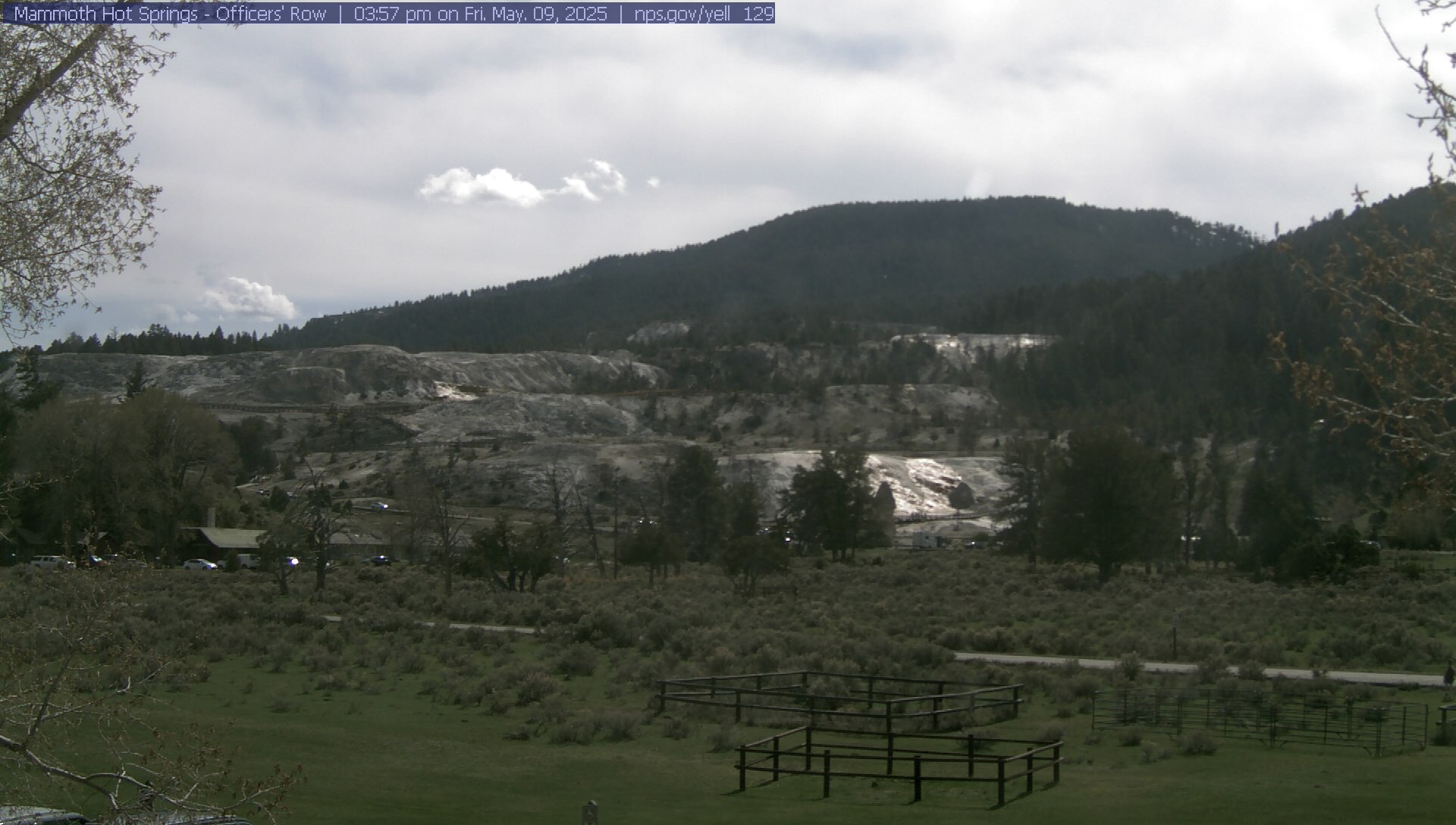
Indian Creek Campground is a smaller, quieter campground south of Mammoth Hot Springs. It has a more rustic feel and works well for visitors exploring the north side of the park.
Lewis Lake Campground sits near Lewis Lake on the southern side of Yellowstone. It is a simpler campground that works well for visitors using the South Entrance or spending time near Lewis Lake and the southern backcountry.
Mammoth Campground is near Mammoth Hot Springs and the North Entrance. It is the park's only year-round campground, with reservations required during the main season and first-come, first-served winter camping listed by NPS.
Norris Campground is near Norris Geyser Basin and gives visitors a central west-side base for geyser areas and the Grand Loop Road. Check current NPS status before planning around Norris because operating dates can change.
Pebble Creek Campground is in the northeast part of Yellowstone near Lamar Valley, but NPS lists it as closed until further notice for flood recovery work.
Slough Creek Campground is a small campground near Lamar Valley. It is popular with visitors focused on wildlife watching, fishing, and the quieter northeast side of the park.
Tower Fall Campground is near Tower Junction and Tower Fall. It is a small campground with access to the northeast side of the park, Lamar Valley, and the road toward Mammoth.
Lodging
There are nine lodges within the park. They are all operated by Yellowstone National Park lodges. For a description of the different lodges go to the NPS site. Make reservations as early as possible. My two favorites are the Lake Hotel and Old Faithful Inn. Even if you do not get reservations, they are worth seeing.