Introduction
Denali National Park and Preserve, located in the heart of Alaska, is a pristine wilderness that captivates visitors with its breathtaking landscapes, abundant wildlife, and rugged beauty.
Alaska Natives have lived on and used the land that is currently known as Denali National Park and Preserve for thousands of years. Denali is at the intersection of the traditional lands of five different native groups: the Ahtna, Dena’ina, Koyukon, Upper Kuskokwim, and Tanana peoples. Each group has their own language and traditions, but they are part of a larger language group called Athabascan or Dené.
Denali National Park was initially established as Mt. McKinley National Park on February 26, 1917. At that time, it covered approximately 2,146,000 acres. In 1980, the park was renamed Denali National Park and Preserve, and its boundaries expanded significantly, roughly tripling in size. Denali now spans an impressive 6,075,030 acres (approximately 9,492 square miles). To put its size in perspective, Denali is roughly half the size of Switzerland. Denali holds the distinction of being the first national park created specifically to protect wildlife. Roughly 600,000 visitors journey to Denali National Park each year, primarily during the main summer season from late May to early September
Denali is home to 39 species of mammals, ranging from tiny shrews to massive moose. Visitors hope to catch glimpses of grizzly bears, caribou, Dall sheep, and wolves.
For more information, visit the park's Wikipedia page.
Top Hikes
These three hikes are good starting points for planning, with at least one more difficult option. Distances and elevation gain are rounded; check the official park trail page for current closures, permits, weather, and trail conditions.
Horseshoe Lake Trail (moderate) - 2.1 miles (3.4 km); elevation gain 393 feet (120 m). A popular entrance-area loop with lake, river, and wildlife-viewing possibilities.
Mount Healy Overlook Trail (difficult) - 5.4 miles (8.7 km); elevation gain 1,700 feet (518 m). A steep climb from the visitor center area to a high overlook.
Savage Alpine Trail (difficult) - 4.0 miles (6.4 km); elevation gain 1,500 feet (457 m). A tundra route near Savage River with exposed terrain and big mountain views.
Backpacking
Denali National Park and Preserve offers a unique backpacking experience, with no trails, designated routes, or backcountry campsites to guide your wilderness adventure. Backpacking permits are required for overnight trips in the Denali backcountry and are issued free of charge. From mid-May to late September, permits are issued in person at the Backcountry Information Center on the Denali Bus Depot campus, no more than one day prior to the start of the trip. In the fall, winter, and spring, backcountry permits are available at the visitor center. All members of the backpacking party must attend a backcountry orientation before the permit is issued. Bear-resistant food containers are required. I would highly recommend a Garmin, or something similar, for any backpacking in Denali.
Wildlife Viewing
Denali National Park and Preserve is home to a diverse range of wildlife, including 39 species of mammals, 169 species of birds, 14 species of fish, and 1 species of amphibian. Some of the most iconic, large mammals, such as grizzly and black bears, wolves, caribou, moose, and Dall's sheep, can be seen by lucky visitors. Some of the more-often seen small mammals include arctic ground squirrels, red squirrels, foxes, and marmots. The bird life of Denali is varied and impressive. Golden eagles and the rare, often transitory bald eagles, are among the largest avifauna in the park. The most commonly seen birds include ravens, mew gulls, gray jays, and ptarmigan. The NPS website has additional information for seeing wildlife.
Generally speaking, your best chances to see wildlife will be while riding a bus ride on the Denali Park Road. A bus offers numerous advantages for the wildlife seeker. You sit much higher than in a normal vehicle, enabling you to see over roadside brush. The bus will have dozens more eyes on it, allowing folks to look in all directions. A trained and experienced driver will take care of navigating you along the windy, serpentine Park Road, which at points travels along the sides of mountains, letting you relax and focus on the scenery and trying to spot animals. At numerous points the road rises above tree line, offering unimpeded views for miles around. Such areas are most likely to yield views of animals, although sometimes at a distance—bringing binoculars will help you enjoy viewing wildlife even at a distance.
Accommodations
There are a few remote lodges that operate inside Denali National Park and Preserve. Camp Denali sits near Wonder Lake. Kantishna Roadhouse and Denali Backcountry Lodge operate in Kantishna, the old mining district near the end of Denali Park Road. Most other hotels and services are outside the park entrance area, including Healy, about 11 miles (17.7 km) north of the park entrance.
Camping
There are six campgrounds to choose from within the park boundaries. Please note that vehicles can only camp in established, open campgrounds in the park - not along pullouts or the side of the road. Reservations are made through Aramark.
Riley Creek Campground is located inside the Denali National Park and Preserve, Alaska. It is the largest campground in Denali, with 142 sites that can accommodate tents or RVs up to 40 feet in length (12 m). The campground is wooded, with some screening between sites whenever possible. Most of the sites are open to either tent campers or vehicles/RVs. The proximity of Highway 3 means there is occasional traffic noise, but also means campers have all the conveniences and amenities of the park entrance area, and businesses outside the park, close at hand. The campground is equipped with basic amenities such as flush toilets, vault toilets, hot showers, fire grates, and food storage lockers.
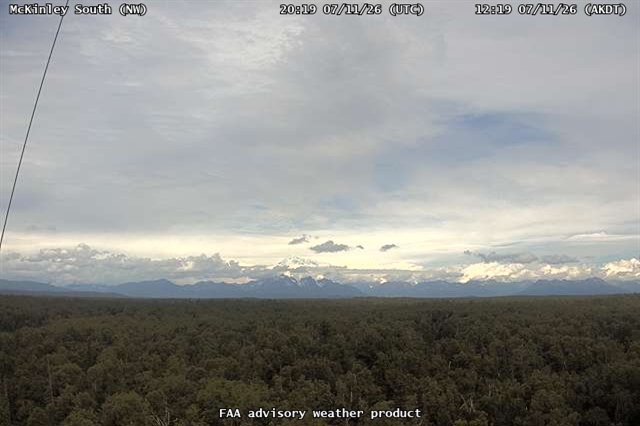
Savage River Campground is located at mile 13 on the Denali Park Road, Alaska. It is a smaller campground than Riley Creek, with 32 sites for RVs and tents. The campground is situated in a spruce forest, with moderate screening between sites. On clear days, Denali can be seen from a short walk below the campground. The campground is open only in summer, from May 20 to mid-September. There are no electric hookups anywhere in the campground, nor is there cell or data service.
Sanctuary River Campground is located at mile 23 on Denali Park Road, Alaska. It is the smallest campground in Denali, with 7 tent-only sites. The campground is accessible only by camper bus. Reservation rules and operating dates can change, so check the official NPS campground page before planning a stay. There is no potable water or electricity at this campground, so bring a filter or purification tablets. Pit-vault toilets are available near the campground entrance. Sanctuary River is a heavily wooded campground, with screening between most sites. The immediate area is brushy, but nearby mountains offer chances to hike directly from the campground and gain elevation, with views of Denali to the south possible on clear days after some strenuous uphill hiking. Small animals, like red squirrels and snowshoe hares, are commonly seen in Sanctuary. Larger animals, like moose, caribou, and grizzly bears, are occasionally seen in the area, though not often in the campground itself.
Teklanika River Campground is located at mile 29 on Denali Park Road, Alaska. It is the second largest campground in Denali, with 53 sites for RVs and tents. Operating dates and reservation rules can change, so check the official NPS campground page before planning a stay. Teklanika River Campground is known as Toch'edha Nik'a in the Lower Tanana dialect, meaning "Water Amulet River." The campground offers no electrical or water hookups and does not sell firewood. Wheelchair-accessible bathrooms are available, and paths and roads in the campground are made of compacted gravel and have little or no gradient. If you wish to camp with a vehicle or RV, you may drive your vehicle to Tek, but rules for staying at Tek are more complex than at other park campgrounds. Check the current NPS rules for minimum stays, vehicle restrictions, and transit bus use before booking.
Igloo Creek Campground is located at mile 35 on Denali Park Road, Alaska. It is one of the smallest campgrounds in Denali, with 7 tent-only sites. The campground is accessible only by camper bus. Reservation rules can change, so check the official NPS campground page before planning a stay. Igloo Creek is nestled between Cathedral Mountain and Igloo Mountain, alongside its namesake creek. The immediate area offers many day hiking opportunities, with graveled creek beds offering quick, comparatively easy access to higher elevations. Cathedral, Igloo, and Sable Mountains are all within reach, and all offer beautiful views from high on their flanks.
Wonder Lake Campground is located at mile 85 on the Denali Park Road, Alaska. It is the closest campground to Denali and offers 28 tent-only sites. Wonder Lake is a remote area, but there are many activities in the region. Evening ranger programs occur nightly at Wonder Lake Campground in summer. A ranger-naturalist program occurs nightly at Wonder Lake Campground in summer.
Transportation in the Park
There are 89 miles (143 km) of roads in the park. However, during the summer, private vehicles may generally only drive the entrance-area portion of Denali Park Road, as far as the Savage River area. To go farther into Denali past the Savage River Campground and Savage River area, visitors must use permitted park bus transportation. Private buses and private tour vehicles are not allowed to carry visitors beyond that point. For current road access, bus schedules, and closures, visit the NPS website.
Free Denali National Park and Preserve offers three free bus lines around the park entrance area to help visitors travel between the visitor center and other facilities. These buses are called the Savage River Shuttle, the Riley Creek Loop Shuttle, and the Sled Dog Demonstration Shuttle. The Savage River Shuttle is perfect for visitors wishing to experience a short bus ride into the park. It departs from the Denali Visitor Center bus stop and the Denali Bus Depot every 30 minutes and travels to trailheads at Mountain Vista and Savage River, where parking is extremely limited. The Riley Creek Loop Shuttle continuously circuits the entrance area, linking all major visitor facilities every 30 minutes. The Sled Dog Demonstration Shuttle is a seasonal shuttle that operates from late May to early September and provides transportation to the sled dog kennels. All shuttles operate daily in summer and are wheelchair accessible. The main bus stops are located at the Denali Bus Depot and the Denali Visitor Center. Numerous other stops are indicated on the map, for people who are at Riley Creek Campground or other facilities. Shuttle bus schedules are posted at all bus stops and available on the National Park Service website.
Narrated and Non-Narrated Transit Denali National Park and Preserve offers narrated tour buses that are designed to provide a guided and informative trip into the park. Unlike non-narrated transit buses, tour buses feature a trained naturalist who both drives the bus and narrates during the trip. The drivers provide detailed information about the park's history, geology, flora, and fauna, and answer questions from passengers. The tour buses begin and end at various locations around the entrance of the park and do not pick up at campgrounds along the Denali Park Road. They are not designed for passengers to disembark and re-board. Transit buses are a better option for passengers who want to get off the bus to hike, picnic, etc. There are a few different bus tours from which to choose. All tours are conducted by certified driver-naturalists who will provide a guided, informative trip into the park. Tour buses are tan-colored and transit buses are green to help you identify the different types of buses in the park.
Private tour operators may offer services outside the restricted park road area, but they cannot operate private buses or private tours into Denali past the Savage River area.
Restaurants and Grocery Stores
We couldn't remember any restaurants or grocery stores within the park. The NPS website did not list any. However, both are located right outside the park.