Introduction
Abel Tasman National Park protects golden beaches, sheltered bays, tidal estuaries, coastal forest, granite headlands, islands, and marine wildlife at the northern end of New Zealand's South Island. It is New Zealand's smallest national park, but it is one of the country's best known walking and kayaking destinations.
For broader background, see the Abel Tasman National Park Wikipedia page. For official trip planning, huts, campsites, safety notices, tides, and track information, use the Abel Tasman National Park official DOC site.
Top Hikes
Abel Tasman Coast Track is the classic Great Walk. DOC describes it as a coastal track with beaches, forest, estuaries, huts, campsites, and water taxi access. The full route is about 60 km / 37 mi and is usually walked over 3-5 days; elevation gain varies by section, but the track is generally easier than New Zealand's alpine Great Walks and reaches roughly 200 m / 660 ft near its higher points. Tidal crossings must be planned carefully.
Wainui Falls Track is a popular shorter waterfall walk from Wainui Bay. DOC lists the track as a 1 hr 20 min return walk, about 3.4 km / 2.1 mi return, through native forest to the falls; elevation gain is modest, roughly 100 m / 330 ft.
Inland Track is the difficult option. DOC describes it as steep, rough underfoot, and more demanding than the Coast Track. The listed Inland Track section is about 15.1 km / 9.4 mi, and longer inland-route combinations can create a multi-day circuit with significant climbing, often roughly 800-1,000 m / 2,600-3,300 ft of total ascent depending on route choices.
Camping and Lodging
DOC manages Abel Tasman huts and Abel Tasman campsites in the national park, including Great Walk accommodation on the Coast Track. Bookings and fees are required for huts and campsites, and private lodges, water taxis, guided walks, kayak trips, and gateway-town lodging are separate.
Kayaking and Water Access
Sea kayaking is one of the signature ways to experience Abel Tasman. DOC notes that visitors should plan around tides, sea conditions, weather, landing restrictions, and marine safety. Water taxis and boat services can help link coastal track sections, but schedules and access points vary by season and conditions.
Weather and Tides
Abel Tasman is coastal, so weather, tides, swell, and wind can matter as much as trail distance. Some estuary crossings on the Coast Track are tide-dependent, and sea kayaking should be matched to forecast conditions and skill level. Check DOC guidance and local forecasts before committing to a route.
Webcam Notes
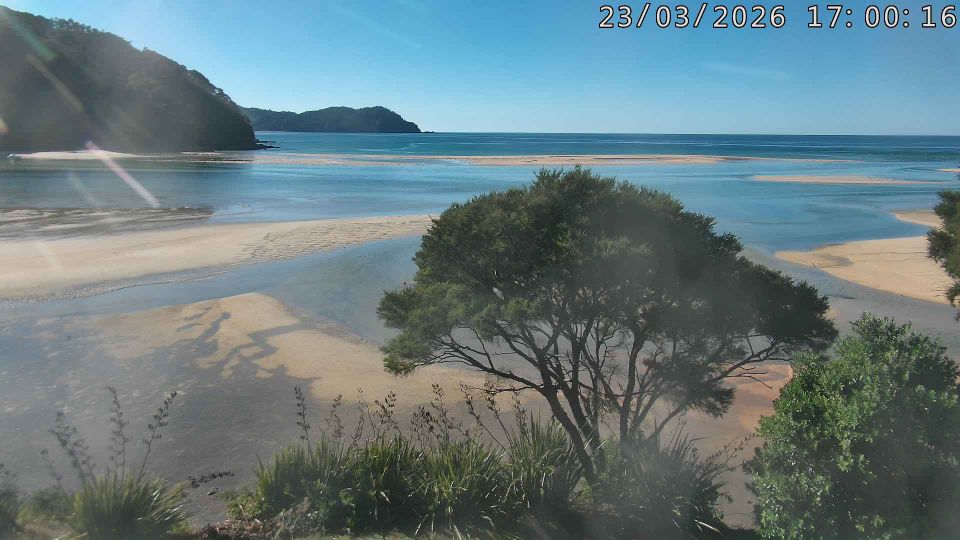
Feed credit: YouTube, Meteoblue, and Windy. Project Janszoon camera pages are kept in the links section for reference, including Awaroa, but the Awaroa timelapse is not embedded while its current snapshot feed is empty.