Aso-Kuju National Park Webcams

View Aso-Kuju National Park webcams and planning links for Mount Aso, Nakadake, Kusasenri, the Aso Caldera, Mount Kuju, Yamanami Highway, maps, weather, volcanic safety, and official visitor information.

Live Cams & Maps

The Aso-Kuju National Park webcams include Aso Volcano WorldCam Preview from WorldCam / RKK. Check these views with the map and weather before you visit.

Park location
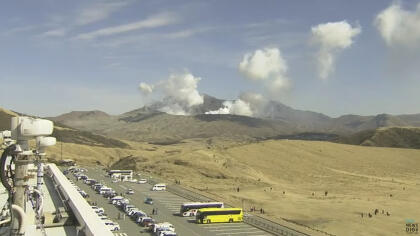
Aso Volcano WorldCam Preview: WorldCam preview looking toward Aso volcano; open the provider page for the current camera view.
WorldCam / RKKAso Volcano WorldCam Preview

Preview image with provider webcam link

WorldCam preview looking toward Aso volcano; open the provider page for the current camera view.

Open live webcam

Current Conditions

Live alerts where available, air quality, and official road status links for Aso-Kuju National Park.

Alerts Official Updates

Open the official park site for current notices and closures.

Open official updates
Roads Official Status

Use the official park site for road closures, seasonal access, and local travel notices.

Open road conditions

Weather

Next 12 hours Local park time

Loading sunrise and sunset...
Loading hourly forecast...

7 day outlook

Loading forecast...

Introduction

Aso-Kuju National Park spans volcanic landscapes in Kumamoto and Oita prefectures on Kyushu. The park is known for Mount Aso, one of the world's largest calderas, active Nakadake crater, broad grasslands, steaming volcanic terrain, the Kuju mountain range, wetlands, hot springs, and scenic drives such as Yamanami Highway.

For broader background, see the Aso-Kuju National Park Wikipedia page. For official planning information, use the National Parks of Japan Aso-Kuju page, Ministry of the Environment Aso-Kuju page, and Aso-Kuju National Park Portal.

Top Hikes

Volcano, weather, road, and trail conditions matter more than the calendar here. Check official access and volcanic gas notices before traveling to the Mount Aso crater area or higher Kuju routes.

Mount Aso Nakadake and Takadake area is the difficult volcanic summit option when access is permitted. Routes vary with crater closures and trail status, but a common high-route outing is roughly 6-8 km / 3.7-5 mi with about 500-700 m / 1,640-2,300 ft of elevation gain, with exposed volcanic terrain and fast-changing conditions.

Mount Kuju is one of Kyushu's classic mountain hikes. A common Makinoto Pass route toward Kuju or Naka-dake is about 9-11 km / 5.6-6.8 mi round trip with roughly 600-750 m / 1,970-2,460 ft of elevation gain, depending on the exact summit and side trips.

Tadewara Marsh and Chojabaru walks are easier boardwalk and wetland routes in the Kuju area. Short loops can be about 1-3 km / 0.6-1.9 mi with little elevation gain, making them useful when higher ridges are windy, cloudy, icy, or closed.

Camping, Lodging, and Visitor Centers

The park is spread across several towns and volcanic districts. Visitors commonly base in Aso, Minamiaso, Kurokawa Onsen, Kokonoe, Taketa, Beppu, or Yufuin. Japan National Parks lists visitor information centers including Aso Volcano Museum, Aso Grassland Conservation Center, Chojabaru Visitor Center, Mount Aso Visitor Center, and Minamiaso Visitor Center.

Volcano Safety and Road Access

Mount Aso crater access can close because of volcanic gas, eruption risk, weather, road conditions, or visibility. If the crater road or trails are closed, use webcams and official pages to pivot toward Kusasenri, Daikanbo, Kuju, Tadewara Marsh, hot springs, or lower-elevation viewpoints.

Webcam Notes

Feed credit: WorldCam and RKK. The WorldCam card uses a preview image with a provider link for the current view. Additional Aso-area camera sources may come and go, so this page only displays sources that are currently usable on the site.

Planning answers

Frequently Asked Questions

What is the best time of year to visit Aso-Kuju National Park?

The best time to visit Aso-Kuju National Park is spring or autumn, especially April through June and September through November, for milder volcano, caldera, grassland, and Kuju mountain hiking weather. Summer can be humid and stormy, while winter can bring snow, ice, and changing road or crater access.

What does it cost to enter Aso-Kuju National Park, and do I need a pass or permit?

Aso-Kuju National Park does not generally work like a single gated park with one entrance fee, but museums, parking, buses, ropeway or shuttle services when operating, campgrounds, guided activities, hot springs, and visitor facilities can cost extra. Volcanic gas, weather, and crater safety restrictions can close Mount Aso access at short notice.

Why might an Aso-Kuju National Park webcam be unavailable?

Park webcams can go offline because of weather, seasonal closures, maintenance, power issues, network outages, or camera provider changes.

Where can I confirm official Aso-Kuju National Park conditions?

Use this page as a quick webcam and planning hub, then confirm closures, alerts, road status, permits, and current conditions with the official National Parks of Japan and Ministry of the Environment pages for Aso-Kuju National Park.