Introduction
Sagarmatha National Park protects Nepal's high Khumbu region, including Mount Everest, deep valleys, glaciers, Sherpa villages, monasteries, and high-altitude trekking routes. The park is a UNESCO World Heritage Site and one of the most recognizable mountain landscapes on Earth.
For official planning information, start with the official Sagarmatha National Park website and Nepal Tourism Board park entry fees. For broader background, see the UNESCO Sagarmatha National Park World Heritage page and the Sagarmatha National Park Wikipedia page.
Top Hikes
Distances and elevation gain in Sagarmatha are approximate because most routes are multi-day treks with acclimatization days, side trips, and repeated climbs and descents. Check current trail, flight, weather, permit, and guide requirements before committing.
Everest Base Camp Trek
The Everest Base Camp trek is the classic difficult route through Sagarmatha National Park. A common Lukla to Everest Base Camp and return itinerary is roughly 130 km / 81 mi, reaching Everest Base Camp at about 5,364 m / 17,598 ft. Net elevation gain from Lukla is about 2,500 m / 8,200 ft, but the actual climbing total is higher because the trail repeatedly gains and loses elevation. Most trekkers take about 12 to 14 days with acclimatization stops in Namche Bazaar and higher villages.
Gokyo Lakes and Gokyo Ri
The Gokyo Lakes trek is another popular high route in the Everest region. A common Lukla round trip is roughly 90 to 110 km / 56 to 68 mi depending on side trips, reaching Gokyo Ri at about 5,357 m / 17,575 ft. Net elevation gain from Lukla is about 2,500 m / 8,200 ft, with more total ascent on the ground. The route is difficult because of altitude, weather, and multi-day distance, but it offers lake, glacier, Cho Oyu, and Everest-region views.
Namche to Hotel Everest View
The Namche Bazaar acclimatization hike to Hotel Everest View and Khumjung is a shorter but still steep day hike. A common loop is about 6 to 8 km / 4 to 5 mi with about 400 to 500 m / 1,300 to 1,640 ft of elevation gain. It is popular because it gives trekkers an early Everest-area viewpoint while helping the body adjust before continuing higher.
Permits and Fees
Sagarmatha National Park requires a park entry permit. Nepal Tourism Board lists Sagarmatha National Park entry fees at NRs. 100 for Nepali visitors, NRs. 1,500 for SAARC visitors, and NRs. 3,000 for foreign visitors, with children below 10 free. Trekkers may also need local Khumbu permits, guide or porter arrangements, flights, lodging, meals, and travel insurance that covers high-altitude trekking.
Camping and Lodging
Most visitors sleep in teahouses, lodges, and guesthouses in villages such as Lukla, Phakding, Namche Bazaar, Tengboche, Dingboche, Lobuche, Gokyo, and Gorak Shep. Camping is possible on some guided expeditions, but independent camping is less common than lodge trekking. Book early in peak trekking seasons and expect simpler services at higher elevations.
Getting There
Most treks begin with a flight or road-and-flight combination to Lukla, followed by walking into the park through the Khumbu region. Weather frequently delays flights, especially during the monsoon and shoulder seasons, so build extra days into the plan. Some trekkers use longer approaches from lower trailheads to avoid or reduce reliance on Lukla flights.
Altitude and Safety
Sagarmatha travel is high-altitude travel. Ascend gradually, use acclimatization days, drink water, watch for acute mountain sickness symptoms, and be willing to turn around. Webcams are useful for visibility checks, but they cannot confirm trail safety, flight operations, avalanche risk, bridge status, health risk, or permit rules.
Webcam Notes
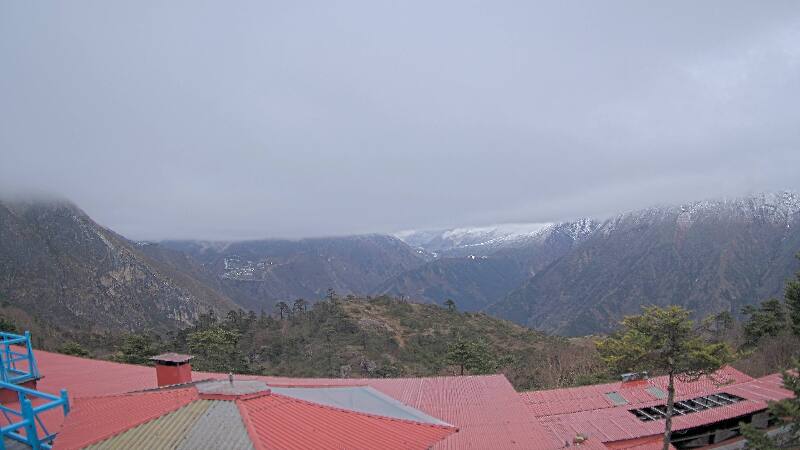
Feed credit: Panomax and GeoWebcams. Panomax provides the current Hotel Everest View image, while GeoWebcams currently reports the Edelweiss Pheriche valley feed online. Webcam availability can change with weather, power, connectivity, and provider maintenance.